
Plus Size Fashion Questions Answered: What Actually Works for Your Body
You bought a shirt online. The size chart said it would fit. It arrived, and now it pulls across the chest, rides up at the waist, or hangs like a tent. This isn’t bad luck — it’s bad information. Plus size fashion isn’t just “bigger clothes.” It’s a different set of rules for proportions, fabric behavior, and how garments interact with curves. These are the real questions people ask, answered with specifics you can use today.
Why Do Clothes Fit Differently on Plus Size Bodies Than Straight Size Bodies?
The short answer: pattern grading. Most brands start with a size 4 or 6 sample, then scale up. Scaling up adds inches equally everywhere — chest, waist, hips, sleeves. But human bodies don’t grow evenly. Your upper arm circumference doesn’t increase at the same rate as your waist. Your bust-to-waist ratio changes. Standard grading creates a garment that fits nowhere well.
What “Plus Size” Actually Means in Garment Construction
True plus size brands like Universal Standard and Eloquii use separate base patterns. They draft from a size 14 or 16 model, then grade up from there. That means the shoulder-to-bust ratio, armhole depth, and hip curve are designed for actual plus proportions — not stretched straight-size patterns. Torrid also uses dedicated plus blocks for their denim and tops. If a brand says “sizes XS-3X” but doesn’t specify plus-specific drafting, expect poor fit past size XL.
The Three Measurements Brands Get Wrong
Three places fail most often: bicep circumference (sleeves bind), shoulder width (seams sit too far in or out), and rise length (pants don’t sit at the natural waist). When you shop, check these three points on the size chart. If a brand doesn’t list bicep width or rise length, assume they’re using straight-size grading. Lane Bryant publishes detailed rise and inseam measurements. Use that data.
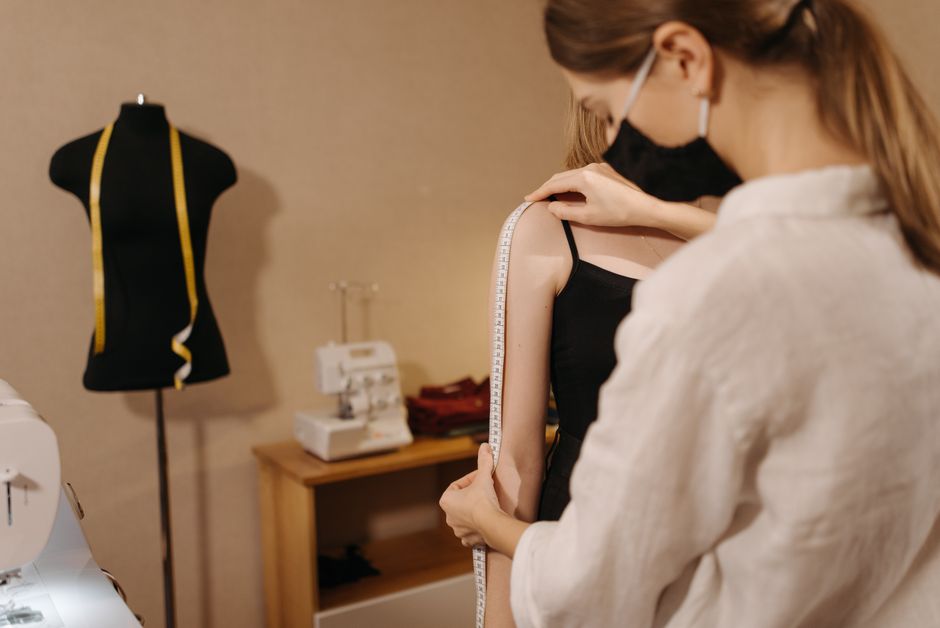
The fix: measure your actual bicep, shoulder width, and torso length. Compare them to the garment measurements, not the size label. A size 22 in one brand fits like a size 18 in another. The number is irrelevant. The numbers on the tape measure matter.
Should I Size Up for a Looser Fit or Buy True to Size?
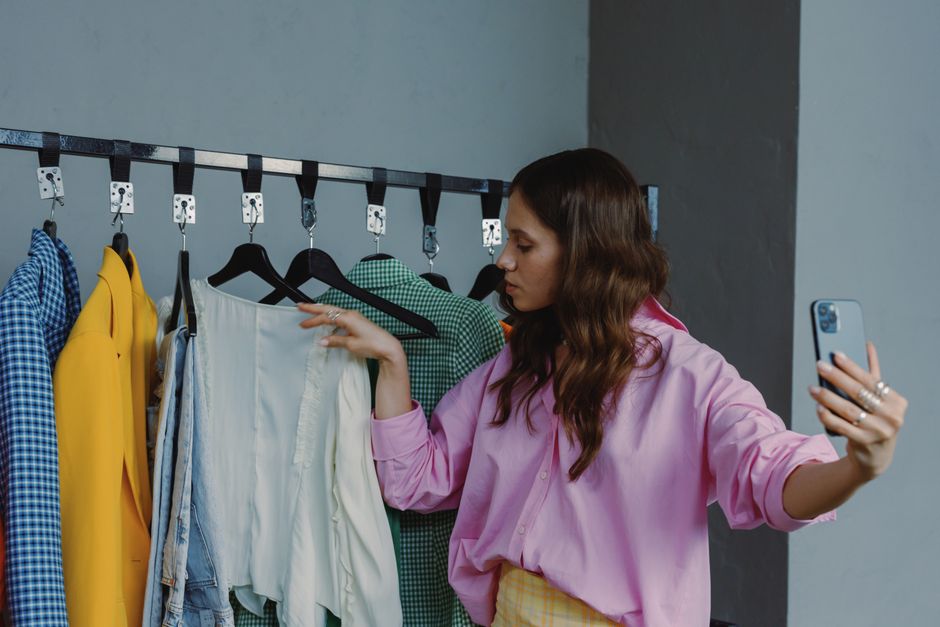
This is the most common question. The answer depends on fabric and cut. Sizing up in a structured garment (blazer, button-down shirt, jeans with no stretch) creates new problems: shoulders drop, armholes gape, waist bands bunch. Sizing up in stretch knits (jersey tees, leggings, ribbed dresses) can work — but there’s a better approach.
Buy for the largest part of your body, then tailor the rest. If your bust is 44 inches and your waist is 38 inches, buy the size that fits your bust. Take in the waist. Pants: buy for hips and thighs, have the waist taken in. This costs $15-25 at a local tailor and transforms how everything looks.
When Sizing Up Actually Works
Oversized silhouettes (slouchy sweaters, boyfriend blazers, wide-leg pants) intentionally have extra fabric. Sizing up one size in these is safe — the design accommodates volume. But avoid sizing up in: fitted blazers, pencil skirts, non-stretch denim, and button-front shirts. These require precise fit. One size up creates pulling and gaping that looks accidental, not intentional.
The Stretch Fabric Trap
High-stretch fabrics (4-way spandex blends, ribbed knits) can mask poor fit temporarily. After four hours of wear, they relax and sag. You end up pulling at your clothes all day. Nylon-spandex blends with at least 20% spandex hold shape better than cotton-spandex blends. Athleta uses a 78% nylon / 22% Lycra blend in their leggings that doesn’t bag out. Old Navy’s Powersoft line (77% nylon, 23% spandex) costs $35 and holds shape for 8+ hours. That’s better value than sizing up in a cheap cotton tee that stretches out by lunch.
What Fabrics Actually Work for Plus Size Bodies?
Fabric choice determines 80% of how a garment looks and feels. The wrong fabric makes a perfect size chart fit look sloppy. The right fabric makes a slightly imperfect size look intentional.
| Fabric | Why It Works | Best For | Brand Example |
|---|---|---|---|
| Ponte di Roma | Double-knit, heavy drape, no cling, holds structure | Pants, skirts, sheath dresses | Universal Standard Ponte Pant ($98) |
| Tencel Lyocell | Flows over curves, breathable, resists wrinkles | Blouses, wide-leg pants, dresses | Everlane (sizes up to 3X) |
| Ribbed cotton (tight gauge) | Stretches without losing shape, skims not clings | T-shirts, turtlenecks, bodycon dresses | Torrid Premium Rib Tee ($30) |
| Stretch denim (2%+ elastane) | Holds shape at hips and thighs, doesn’t bag at knees | Jeans, jackets | Good American Good Legs Jean ($149) |
| Crepe (polyester or viscose) | Drapes away from body, no static cling, matte finish | Blouses, jumpsuits, wide-leg trousers | Eloquii Crepe Jumpsuit ($80) |
Avoid these fabrics: stiff 100% cotton (no give, pulls at seams), shiny satin (highlights every curve, shows wrinkles), thin rayon jersey (sags after one wear, goes sheer when stretched).
How Do I Dress for My Body Shape Without Following Generic Rules?
Generic body shape rules (“apple shapes should wear V-necks”) are reductive. They assume all bodies in a category share the same proportions. They don’t. Instead of shape typing, use proportion balancing — a method that works for any body.
Proportion Balancing: The Method
Identify your widest horizontal line. It’s usually shoulders, bust, waist, or hips. Then identify your narrowest horizontal line. The goal: add visual weight to the narrow line, subtract visual weight from the widest line.
Wide shoulders + narrow hips? Add volume below (wide-leg pants, A-line skirts). Narrow shoulders + wide hips? Add volume above (shoulder pads, puff sleeves, boatneck tops). This isn’t “hiding” anything. It’s creating visual balance so the eye moves smoothly over your silhouette.
Specific example: If your waist is your narrowest point, emphasize it. Wear a belt over a blazer. Tuck shirts into high-waisted pants. If your waist is your widest point, don’t belt. Use vertical lines — open cardigans, long necklaces, seam details down the center — to create length.
Vertical Line Rules That Actually Work
Three rules that hold true across all plus sizes: monochrome outfits create a continuous vertical line (same color top and bottom). V-necks draw the eye down, not across. Hemlines that hit at the narrowest part of your leg (usually just above or below the knee) make legs look longer. Midi hems that hit at mid-calf cut the leg line and make you look shorter. Stick to above-knee or ankle-length.
What Are the Most Common Plus Size Fashion Mistakes (and the Fixes)?
These mistakes show up in real life, not fashion magazines. They’re fixable in under five minutes.
Mistake 1: Buying clothes that are too big. The “hide my body” instinct. Oversized clothes make you look wider, not smaller. Fabric that doesn’t touch your body adds volume. The fix: clothes should skim, not hang. You should see your shape underneath — not every detail, but the general silhouette.
Mistake 2: Ignoring the back view. You check the front in the mirror. You don’t check the back. Horizontal back wrinkles mean the garment is too tight across the shoulders or back. A drooping back hem means the rise is too long. The fix: take a back photo in the fitting room. If the fabric pulls or gaps, move up a size or try a different cut.
Mistake 3: Wearing the wrong bra. This alone changes how every top and dress fits. A bra with the correct band size (not +4 inches, measure directly under bust) and proper cup depth lifts your bust, which changes how fabric falls from shoulders to waist. ThirdLove offers free virtual fittings. Victoria’s Secret measures band and bust separately. A $50 bra that fits correctly makes a $20 top look like $80.
Mistake 4: Following trends without checking fit. Wide-leg pants look great on a model. On a plus body, they can look like a curtain if the rise is wrong. The fix: try trends in fabrics that drape, not fabrics that stand away from the body. A wide-leg pant in ponte or Tencel will hang better than one in stiff cotton twill.
Which Plus Size Brands Actually Deliver Consistent Fit?
Not all plus size brands are equal. Some have dedicated design teams. Some just scale up. These five brands consistently get the details right.
Universal Standard (sizes 00-40). Their fit is the gold standard. They use plus-specific blocks, detailed size charts with bicep and rise measurements, and a fit guarantee: if you change sizes within a year, they’ll swap your clothes for free. The Tehran Ponte Pant ($98) is a bestseller for good reason — it fits at waist, hip, and thigh without pulling. The Seine High-Rise Jean ($125) has 2% elastane and holds shape through a full day of wear.
Eloquii (sizes 14-28). Best for workwear and occasion dressing. Their Crepe Jumpsuit ($80) has a wrapped waist that adjusts to different torso lengths. Their Power Suit Blazer ($130) is cut for broader shoulders and larger arms — no pulling across the back. They publish garment measurements for every piece. Use them.
Good American (sizes 00-32). Best for denim. The Good Legs Jean ($149) comes in four rises (low, mid, high, ultra-high) and multiple inseams. The fabric blend (cotton, elastane, polyester) recovers after washing — no baggy knees by noon. Their size chart includes hip and thigh measurements, not just waist.
Torrid (sizes 10-30). Best for casual basics and denim. Their Premium Rib Tee ($30) uses a tight-gauge rib that stretches without going sheer. Their Bombshell Skinny Jean ($70) has a hidden elastic waistband that prevents gapping at the back. They also offer tall and short lengths in most styles.
Lane Bryant (sizes 10-40). Best for bras and structured tops. Their Cacique bras (starting at $45) come in band sizes 36-50 and cup sizes B-H. The No-Gap Cami ($35) has a built-in shelf bra that solves the “cami pulls at the bust” problem. Their size charts are among the most detailed in the industry.
The takeaway: don’t buy from a brand that doesn’t publish garment measurements. If a size chart only shows “bust, waist, hip” without garment-specific numbers, you’re gambling. Stick to brands that treat plus size as a design specialty, not an afterthought.
You came here because a shirt didn’t fit. Now you know why: the pattern was wrong, the fabric was wrong, or the size was wrong for your proportions. The next shirt you buy will fit because you checked the bicep measurement, chose a fabric with drape, and bought for your widest point. That’s not luck. That’s knowing what to measure.