


Men’s Fashion Tips: 7 Mistakes That Make You Look Sloppy
Most men spend money on clothes that make them look worse. Not because the clothes are ugly, but because they don’t fit, don’t match, or don’t belong in a grown man’s closet. I’ve seen a $2000 suit look cheap on a guy who didn’t get the sleeves hemmed. I’ve seen a $30 t-shirt look expensive on a guy who understood proportions.
These seven men’s fashion tips fix the mistakes that keep you from looking put-together. No fluff. No trend-chasing. Just what works.
1. The Shoulder Fit Rule — Why 80% of Men Wear the Wrong Jacket Size
Here’s the single most important fit rule in men’s fashion: the shoulder seam of a jacket or blazer must sit exactly at the edge of your shoulder bone. Not an inch past it. Not hanging off. Exactly there.
I see this wrong every day. Guys buy blazers off the rack that are two sizes too big because they think “roomy” means comfortable. It doesn’t. It means you look like you borrowed your dad’s jacket for a funeral.
The $10 Test You Can Do Right Now
Stand in front of a mirror wearing your jacket. Raise both arms straight out to the sides, parallel to the floor. If the jacket shoulder lifts more than half an inch off your actual shoulder, the fit is wrong. Period. No tailor can fix a shoulder that’s too wide — the armholes are set in the wrong place and the whole silhouette collapses.
What to Look For Instead
When you try on a blazer or sport coat, button it and stand naturally. The shoulder seam should sit right at the bone. The fabric should drape cleanly from that point, no ripples or pulls. Brands like SuitSupply and Spier & Mackay make off-the-rack jackets with decent shoulder construction for $400–$600. If you’re on a budget, check J.Crew factory jackets — they run slimmer in the shoulder than most mall brands.
Tailors can fix sleeve length, waist suppression, and even collar gap. They cannot fix a shoulder that’s two inches too wide. That jacket is dead. Don’t buy it.
2. Your Pants Are Too Long — The Break Is Ruining Your Silhouette
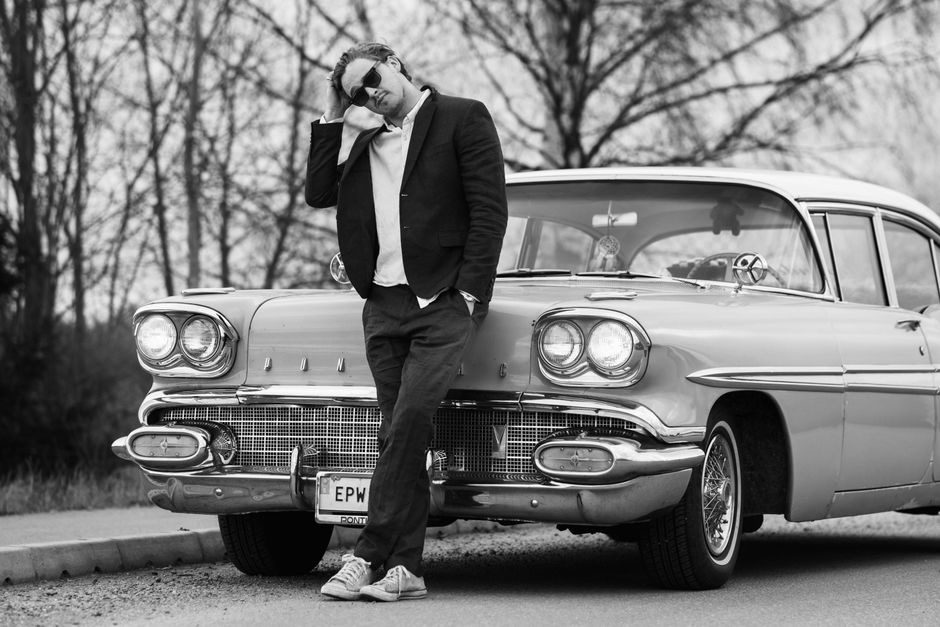
This is the easiest fix in men’s fashion and the most ignored. Your pants should hit the top of your shoe with a single, slight break — that’s the fold where the fabric touches the shoe. Not a stack of fabric pooling on your laces. Not touching the floor when you stand barefoot.
A full break (the fabric folds twice or more) shortens your legs visually by at least an inch. For shorter men, that’s devastating. For taller men, it just looks sloppy.
| Pant Break Type | How It Looks | Best For | Hem Length (Inseam) |
|---|---|---|---|
| No break (cropped) | Ankle barely shows, no fabric touches shoe | Casual chinos, summer linen | 1–1.5 inches shorter than full break |
| Slight break | One soft fold rests on shoe tongue | Dress pants, wool trousers, most suits | Standard hem length |
| Full break | Two or more folds stack on shoe | Wide-leg or pleated trousers only | Add 1–1.5 inches to standard |
Take your pants to a tailor. Hemming costs $10–$15. It changes your entire silhouette. If you wear raw denim from Naked & Famous or Unbranded, get it hemmed before you even wear them — the chainstitch hem at the factory is rough and can’t be adjusted later without losing the original stitch.
3. The Belt and Shoes Must Match — This Is Not Optional
Black belt with brown shoes. Brown belt with black shoes. I see this at restaurants, offices, and weddings. It’s the fastest way to signal that you don’t understand the basics.
The rule: your belt should match your shoes in color and finish. Black shoes = black belt. Brown shoes = brown belt in a similar shade (dark brown with dark brown, tan with tan). If you wear oxblood or burgundy shoes, get a belt in the same color family — Allen Edmonds makes matched belt-and-shoe sets for their core colors.
Exceptions exist: a casual canvas belt with sneakers doesn’t need to match. A suede belt with suede shoes is fine. But for leather dress shoes, the belt must match. Full stop.
If you only own one belt, make it a medium-brown leather belt with a simple brass buckle. It works with brown shoes, tan shoes, and even some casual black footwear. Anson Belt makes a no-hole ratcheting belt that adjusts in 1/4-inch increments — no more punching holes or wearing a belt that’s too loose.
4. Denim Fit — The Three Options That Work

You have three denim fits that look good on most men. Everything else is a gamble.
- Slim straight: Fits through the thigh, straight from knee to ankle. Not skinny. Not loose. This is the safest choice. Brands like Levi’s 511 and Everlane Slim Straight do this well.
- Straight leg: Consistent width from hip to hem. Works best with boots or chunkier sneakers. Levi’s 501 is the classic example.
- Tapered: Slim through the thigh, narrows at the ankle. Good for athletic builds with bigger quads. Naked & Famous Easy Guy and Gustin Slim Tapered are solid options.
What doesn’t work: skinny jeans on anyone over 25 (unless you’re very lean and wearing them with boots), relaxed fit (looks baggy in the wrong places), and anything with excessive distressing (rips, holes, fading patterns that look fake).
Dark indigo or black denim is the most versatile. Buy raw or one-wash (not pre-distressed). It looks better longer and ages to fit your body. Uniqlo Selvedge at $50 is the best entry point. Iron Heart at $300+ is the endgame.
5. Your T-Shirt Collar Is Stretched Out — Replace It Now
A stretched collar makes even an expensive t-shirt look like a rag. If your t-shirt collar doesn’t snap back to its original shape after washing, it’s dead. Toss it.
The problem: most men keep t-shirts for 3–5 years. Cotton collars start to warp after 20–30 washes. The neckband loses elasticity, and suddenly you have a visible gap between your collar and neck. That gap screams “I don’t check my clothes before I leave the house.”
Buy t-shirts with a reinforced collar. Uniqlo Supima Cotton ($15) has a tight ribbed collar that holds its shape for about 40 washes. Buck Mason Pima Crew ($38) uses a thicker cotton that resists stretching longer. Lady White Co. ($70) makes a tubular-knit tee with a collar that stays tight for years.
When you wash t-shirts, turn them inside out. Use cold water. Hang dry — the dryer heat breaks down the elastic in the collar. If you must machine dry, use low heat and pull them out while slightly damp.
6. The Two-Button Blazer Rule — Do What the Tailor Says

Most men’s blazers and suit jackets have two buttons. The rule is simple: button the top button only. Never button the bottom. When you sit down, unbutton the top.
This isn’t arbitrary. The bottom button is designed to stay open so the jacket drapes correctly when you move. Buttoning it pulls the fabric tight across your stomach and creates an X-shaped wrinkle pattern that looks terrible. I’ve seen men in $3000 Canali suits ruin the line by buttoning both buttons.
For three-button jackets: button the middle, sometimes the top, never the bottom. For double-breasted jackets: button the left side only (the functional button), leave the decorative ones alone.
If your jacket fits correctly, you should be able to button the top button and slide a fist comfortably between the jacket and your chest. If it’s tight enough to pull across the buttons, the jacket is too small. If it hangs loose enough to wrinkle, it’s too big.
7. Your Shoes Are the First Thing People Notice — Stop Wearing Worn-Out Soles
I don’t care how nice your watch is. I don’t care how expensive your jacket is. If your shoes are scuffed, the soles are worn down, or the leather is cracked, you look like you don’t care about details. And people notice shoes first because they’re at eye level when you walk into a room.
Here’s what to do:
- Dress shoes: Resole them when the leather sole wears through to the cork layer. Allen Edmonds recrafting service costs $150 and returns your shoes looking new. Cobbler Union and Meermin also offer resoling services. A good pair of dress shoes should last 10–15 years with regular resoling.
- Boots: Replace the heel when it’s worn down to the first layer of nails. Red Wing Iron Ranger boots ($350) can be resoled for $100–$125. The uppers will outlast three soles.
- Sneakers: Replace them when the tread is smooth or the midsole starts to crumble. Common Projects Achilles ($440) can be recrafted by some cobblers, but most sneakers are disposable after 500–800 miles of wear.
If you don’t want to maintain shoes, buy Thursday Boot Company ($200) or Beckett Simonon ($150) — they use Goodyear welt construction that can be resoled by any cobbler. Avoid glued soles on anything you plan to keep longer than a year.
One pair of well-maintained dress shoes looks better than five pairs of cheap, scuffed ones. Spend your money on fewer pairs and take care of them.