

What To Wear To A Destination Wedding: The Destination Wedding Guest’s Climate Problem: What to Wear in 2026
You open your closet three days before the flight. The invitation says “beach formal.” You own a wool suit and a polyester dress. Neither works. Now you’re shopping under pressure, and that’s how you end up $200 poorer with something that wrinkles the second you sit down.
Destination weddings have a specific problem: the climate at the venue is usually the opposite of where you live. A wedding in Tulum in July needs a completely different wardrobe than one in the Swiss Alps in December. This guide breaks down exactly what to pack for four major climate types, with real brands, real fabric specs, and the mistakes that cost guests comfort and money.
Tropical and Beach Weddings: Humidity Is the Enemy
High humidity and direct sun are the two factors that ruin most outfits. Polyester traps heat. Dark colors absorb it. Long sleeves (even lightweight ones) turn into sweat sponges. The goal here is air movement and moisture wicking, not just looking good.
Fabrics That Actually Work
Linen is the obvious choice, but not all linen is equal. Look for a linen-cotton blend (60% linen / 40% cotton) — it wrinkles less than pure linen and breathes almost as well. Tencel lyocell is another strong option. It has a silkier drape than linen, resists wrinkles, and wicks moisture better than cotton. Avoid anything with more than 20% polyester or nylon in the weave.
Specific Outfit Rules
Women: A midi or maxi dress in a lightweight fabric like the Reformation Eloise Dress ($248, 100% Tencel) or A.L.C. Resort Collection slip dress ($395, 100% viscose). Both pack flat and don’t require steaming. Avoid fitted bodices with boning — they trap heat. Open backs or cutouts are acceptable for beach ceremonies, not for formal evening receptions.
Men: A linen or cotton-linen blend suit jacket in a light color (beige, stone, light grey). Mango’s linen blend suit ($180 for the jacket) is a budget option that holds up. Pair with an unlined cotton shirt — no lining means less heat retention. Loafers or leather sandals, never closed-toe dress shoes. The Everlane The Italian Leather Day Loafer ($198) works for both beach and dinner.
Failure Mode: The Polyester Trap
I see guests in “breathable” polyester-blend dresses from fast-fashion brands. They look fine in the hotel AC. Outside, they’re soaked within 20 minutes. Test this: hold the fabric to your mouth and breathe through it. If you feel resistance, it won’t breathe on the beach. Hard pass.
Desert and Arid Weddings: Dry Heat and Sand

Desert weddings (think Palm Springs, Sedona, Marrakech) have low humidity but intense sun. Temperature swings of 30°F between day and ceremony are normal. The primary failure is dressing for the daytime heat and freezing at the evening reception.
Layering Strategy That Works
Start with a base layer that covers your shoulders (sunscreen will only do so much). Add a lightweight jacket or wrap that you can remove. For men, a wool-cotton blend suit jacket (like Suitsupply’s Havana line in an unlined construction, $399) provides warmth after sunset without overheating during the ceremony. Women should bring a pashmina or a lightweight cashmere wrap — the Loro Piana Baby Cashmere Stole ($1,195) is luxury, but Quince’s Mongolian Cashmere Wrap ($49.90) is nearly as good for 1/20th the price.
Footwear Rules
Sand gets everywhere. Stilettos sink into loose dirt. Open-toe heels collect grit. Block heels or wedge sandals (2-3 inch height) are the only safe option for outdoor desert ceremonies. Sam Edelman’s The Bay Sandal ($100) has a 2.5-inch block heel that stays stable on gravel. Men should avoid suede shoes — sand sticks to suede and is nearly impossible to remove. Leather or canvas loafers only.
When NOT to Wear Natural Fibers
Pure linen in a desert is a bad idea. It dries out, becomes stiff, and holds sand in the weave. A linen-cotton blend or a lightweight wool (tropical wool, 8-9 oz weight) is better. Patagonia’s Responsibili-Tee ($45, 100% recycled polyester) actually works here because it’s a jersey knit that doesn’t trap sand — but only for casual daytime events, not the ceremony.
Mountain and Cool Climate Weddings: Temperature Drops and Wind
Mountain venues (Aspen, Lake Tahoe, Scottish Highlands) have a different problem: the ceremony might be at 8,000 feet with wind chill, and the reception is indoors with heating. You need a single outfit that works for both. The answer is a structured outer layer that you keep on most of the day.
Women: A wool-blend jumpsuit or a midi dress with a tailored blazer. Veronica Beard’s Dickey Jacket ($695) is a classic — it has a removable insert, so you can adjust warmth. Pair with opaque tights (40-60 denier) and closed-toe heeled boots. Frye’s Melissa Button Bootie ($328) has a rubber sole for grip on uneven ground and a 2-inch heel that works for dancing.
Men: A heavyweight wool suit (11-12 oz) is appropriate. J.Crew’s Ludlow Wool Suit ($595) in charcoal or navy. Add a cashmere or merino wool turtleneck instead of a dress shirt — it’s warmer and looks intentional. The Naadam Essential Cashmere Turtleneck ($95) is a solid mid-range option. Leather-soled shoes are dangerous on wet grass or gravel. Rubber-soled dress shoes like Cole Haan’s Zerogrand ($150) solve this.
Failure Mode: Ignoring Wind
A 20 mph wind at 50°F feels like 38°F. That’s cold enough to ruin the ceremony. If your outfit doesn’t have a wind-resistant outer layer, you’ll spend the entire time shivering. A simple solution: a Uniqlo Ultra Light Down Vest ($79.90) worn under a blazer — it’s invisible and adds 15°F of warmth without bulk.
Coastal and Mediterranean Weddings: Salt Air and Unpredictable Breezes
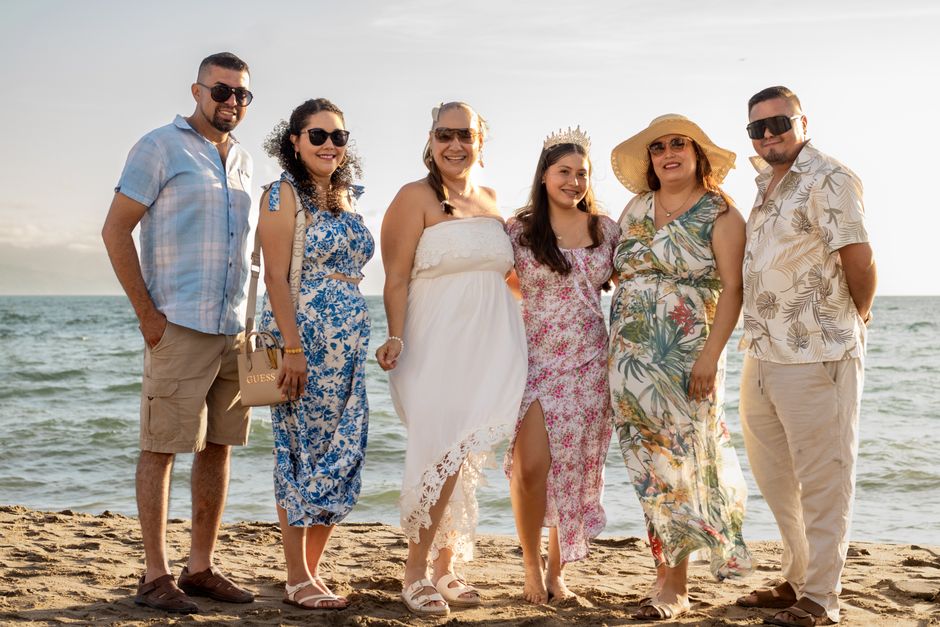
Coastal venues (Amalfi Coast, Santorini, Cape Cod) combine high UV, salt spray, and sudden wind gusts. The salt air ruins certain fabrics and accessories. Silver jewelry tarnishes quickly. Delicate silks can get water spots from ocean spray. The key is choosing fabrics and finishes that resist salt and moisture.
| Fabric | Salt Air Performance | Wind Resistance | Best For |
|---|---|---|---|
| Cotton Sateen | Good — resists salt staining | Moderate | Evening dresses, men’s shirts |
| Linen-Cotton Blend | Fair — can stiffen with salt | Low | Daytime events, casual dinners |
| Tencel Lyocell | Excellent — resists salt and dries fast | Moderate | Dresses, jumpsuits |
| Wool Tropical (8-9 oz) | Excellent — naturally resists salt | High | Suits, blazers |
| Polyester Satin | Poor — salt sticks and stains | Moderate | Avoid for outdoor ceremonies |
Women: A Tencel midi dress with a lightweight wool blazer. Everlane’s The Day Glove Dress ($98) in a midi length, paired with a Mango Wool-Blend Blazer ($120). Both resist salt and pack flat. Jewelry: gold or stainless steel only. Silver will tarnish within hours in salt air.
Men: A cotton sateen or tropical wool suit. Bonobos’s Unstructured Wool Suit ($449) in a light grey — it’s unlined, so it breathes, and the wool resists salt. Leather boat shoes or loafers, no suede. A silk tie is fine indoors, but for outdoor ceremonies, a knitted cotton tie (like Drake’s Knitted Silk Tie, $125) won’t blow around in the wind.
When NOT to Buy a New Outfit
If the wedding is within 30 days and you don’t have time to test the outfit in similar conditions, don’t buy new. Rent from Rent the Runway or The Black Tux. You get climate-appropriate pieces without the commitment. For a one-time event, renting costs less than buying a $300 dress you’ll never wear again.
Budget Breakdown: What You Actually Spend

Most guests overspend because they buy a full outfit from scratch. Here’s a realistic budget for a destination wedding outfit that works across multiple climates:
- Base layer (dress or suit): $100-$400. Target the mid-range: H&M Conscious for women ($89-$129), Mango for men ($150-$250).
- Outer layer (blazer or wrap): $50-$200. Uniqlo blazers ($79.90), Quince cashmere wraps ($49.90).
- Shoes: $80-$200. Sam Edelman block heels ($100), Cole Haan Zerogrand ($150).
- Accessories (bag, jewelry): $30-$100. Madewell leather crossbody ($68), gold-plated earrings from Mejuri ($55).
Total realistic range: $260 to $900. The mistake is spending $600 on a single designer dress that doesn’t work for the climate. Spread the budget across pieces you can mix into your regular wardrobe later.
The Everlane The Day Heel ($145) is a specific shoe that works for tropical, desert, and coastal weddings — it’s a 2-inch block heel in leather, stable on sand and grass, and the neutral colors match most outfits. That’s the kind of multi-use piece worth investing in.