

Comfortable Walking Sandals Stylish Summer Travel: 8 Comfortable Walking Sandals That Are Actually Stylish for Summer Travel
You know the scenario. You pack a pair of cute sandals for your summer trip, and by day two your heels are blistered, your arches ache, and you’re limping past every bench in Rome. The “stylish” sandals you bought look great in the hotel mirror but fail the 10,000-step test. Meanwhile, the orthopedic-looking options promise support but scream “I gave up on fashion.” There’s a better option. These eight walking sandals combine legitimate arch support and cushioning with a silhouette you won’t mind wearing to dinner.
What Makes a Walking Sandal Actually Walkable?
Most sandals fail because they ignore three things: arch support, heel cup depth, and outsole grip. A flat slab of leather or foam might feel fine in the store for five minutes. After five miles, your feet know the truth.
Arch Support Is Non-Negotiable
Your foot has three arches. A sandal that only supports the middle arch (or none at all) forces your plantar fascia to overwork. Look for a molded footbed with a visible contour — not just a slight curve, but a distinct rise under the medial arch. Brands like Birkenstock and Naot build their entire footbeds around this principle. Birkenstock’s cork-latex footbed has a deep heel cup and a pronounced arch that actually supports your foot’s natural shape. Naot uses a cork-and-latex blend with a removable liner, so you can swap in custom orthotics if needed.
Cushioning vs. Stability: The Tradeoff
Too much squish (think memory foam flip-flops) feels good for an hour but destabilizes your gait over time. Your foot sinks in, your ankle wobbles, and your knees compensate. The sweet spot is a mid-density foam or EVA layer — firm enough to support, soft enough to absorb shock. Ecco uses their FLUIDFORM technology, which fuses a lightweight PU foam directly to the sole. It’s not bouncy like a running shoe, but it absorbs impact without sacrificing ground feel. Vionic takes a different approach: a biomechanical footbed with a deep heel cup and a firm density that actively realigns your foot. It feels strange for the first two days, then you can’t go back.
Outsole Grip Matters More Than You Think
Wet cobblestones. Slick marble floors. Sandy boardwalks. A smooth rubber outsole is a slip hazard. Look for a tread pattern with distinct lugs or channels. Teva and Chaco use aggressive treads borrowed from hiking sandals, while Sorel uses a grippy rubber compound with shallow grooves that work on pavement and light trails. If you’re traveling to a city with unpredictable weather or uneven surfaces, don’t skip this spec.
The 8 Sandals That Balance Comfort and Style

Here are the specific models that pass the walking test and the style test. Prices are approximate and vary by retailer.
| Brand & Model | Key Feature | Best For | Approx. Price |
|---|---|---|---|
| Birkenstock Arizona Soft Footbed | Deep heel cup, adjustable straps | All-day wear, wide feet | $140 |
| Teva Tirra | Three-point strap system, shock-absorbing heel pad | Light hiking, water activities | $70 |
| Ecco Yucatan | FLUIDFORM sole, nubuck leather | City walking, dress-casual | $150 |
| Vionic Tide II | Biomechanical footbed, machine washable | Flat feet, plantar fasciitis | $90 |
| Naot Kayla | Anatomical cork footbed, removable liner | Long days on feet | $165 |
| Clarks Breeze Sea | Ultra-light EVA, cushioned heel | Budget-friendly, beach to pavement | $55 |
| Sorel Out N About Plus | Rubber outsole with chevron tread | Wet conditions, light trails | $100 |
| Chaco Z/1 Classic | Adjustable webbing straps, podiatrist-certified footbed | Hiking, adventure travel | $95 |
How to Break In Walking Sandals Before Your Trip
New sandals straight out of the box on a 10-mile walking tour is a recipe for disaster. Even the best footbed needs time to mold to your foot. Plan ahead.
Start With Short Wears
Wear your new sandals around the house for 30 minutes a day for three days. Then graduate to short errands — grocery store, coffee run, a 15-minute walk. Your foot muscles need to adjust to the support. If you feel hot spots or pressure points, mark them with a piece of tape. That tells you where the sandal needs to stretch or where you might need a different size.
Use Thick Socks for Stretching
If the straps feel tight across the top of your foot, put on a pair of thick wool socks and wear the sandals around the house for an hour. The socks stretch the straps without breaking the material. This works especially well for leather Birkenstocks and Naot sandals. Avoid using a hair dryer on synthetic straps — heat can warp the plastic buckles.
Test on Different Surfaces
Walk on carpet, tile, concrete, and grass. Each surface reveals a different issue. Carpet hides fit problems. Concrete reveals them. If your heel lifts more than 1/8 inch on concrete, the sandal is too big. If your toes hit the front edge on a downhill slope, the sandal is too small. Get the fit right before you leave.
When NOT to Wear Walking Sandals
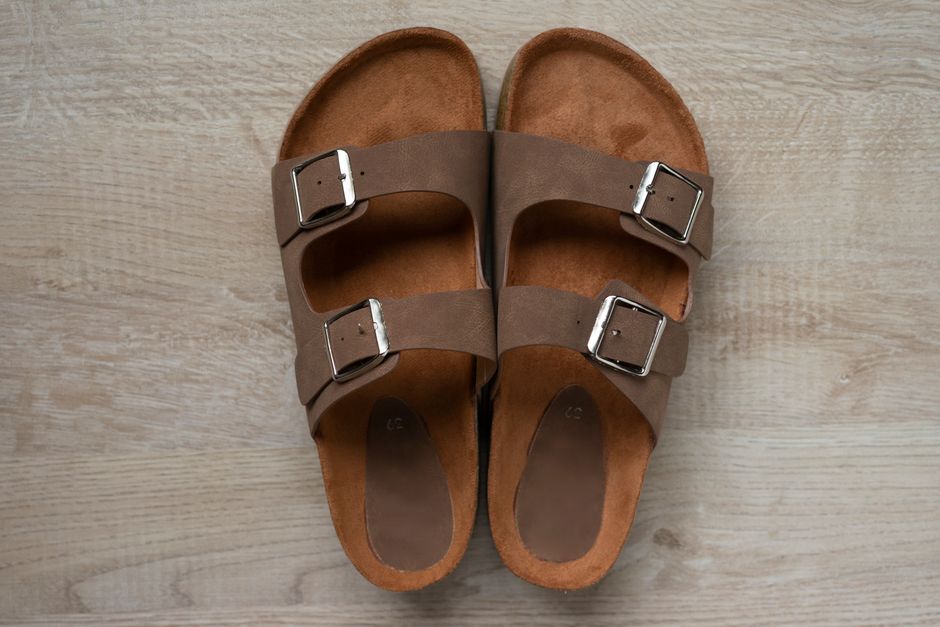
Walking sandals are not universal. There are situations where they’ll hurt you more than help you.
Long Downhill Hikes on Rocky Terrain
Sandals expose your toes and the sides of your feet. On a steep, rocky descent, you can stub a toe, catch a strap on a rock, or roll an ankle. For technical trails, wear closed-toe hiking shoes. The Chaco Z/1 is the one exception — its webbing straps lock your foot in place better than most, but even Chaco recommends closed-toe for serious scrambling.
Very Hot Pavement (Above 100°F / 38°C)
Direct contact with scorching pavement can burn the soles of your feet. EVA and rubber outsoles conduct heat. If you’re walking through a desert city like Phoenix or Las Vegas in July, your sandals will transfer ground heat straight to your skin. Wear closed-toe shoes or sandals with a thick, insulated sole. The Sorel Out N About Plus has a thicker rubber outsole that offers more heat protection than thinner sandals, but it’s not a guarantee.
Formal Events or Fine Dining
Even the most stylish walking sandals still read as casual. A leather Birkenstock Arizona with a dress shirt and chinos can work in a relaxed setting, but for a wedding, a business dinner, or a Michelin-star restaurant, wear loafers or dress shoes. Don’t force a square peg into a round hole. Pack a pair of minimalist leather mules or espadrilles for those occasions.
Which Sandal Should You Buy?

Here’s the compressed verdict. For the majority of travelers — city walking, museum visits, casual dinners, and the occasional beach day — the Birkenstock Arizona Soft Footbed is the best all-around choice. It has the most adjustable fit, the most proven footbed design, and a silhouette that works with shorts, sundresses, and cropped trousers. The Soft Footbed version adds a layer of foam under the cork, which reduces the break-in period significantly. It’s not cheap at $140, but it will last five years or more.
If you have flat feet or plantar fasciitis, skip the Birkenstock and get the Vionic Tide II. The biomechanical footbed actively supports your arch in a way that Birkenstock’s cork bed doesn’t. It’s also machine washable, which is a huge plus for travel. The tradeoff is style — the Tide II looks more athletic than the Arizona. You can dress it up with a linen dress, but it still reads as sporty.
If you need one sandal that does everything from city walking to light hiking, the Teva Tirra is the practical winner. It’s lighter than the Chaco, cheaper than the Ecco, and the three-point strap system locks your foot in place better than any other sandal on this list. At $70, it’s the best value. The style is casual, but the neutral colors (black, olive, navy) blend into most outfits.
Remember that blister scenario we started with? You don’t have to live it. Pick one of these eight, break it in properly, and your summer trip becomes about the sights, not your feet.