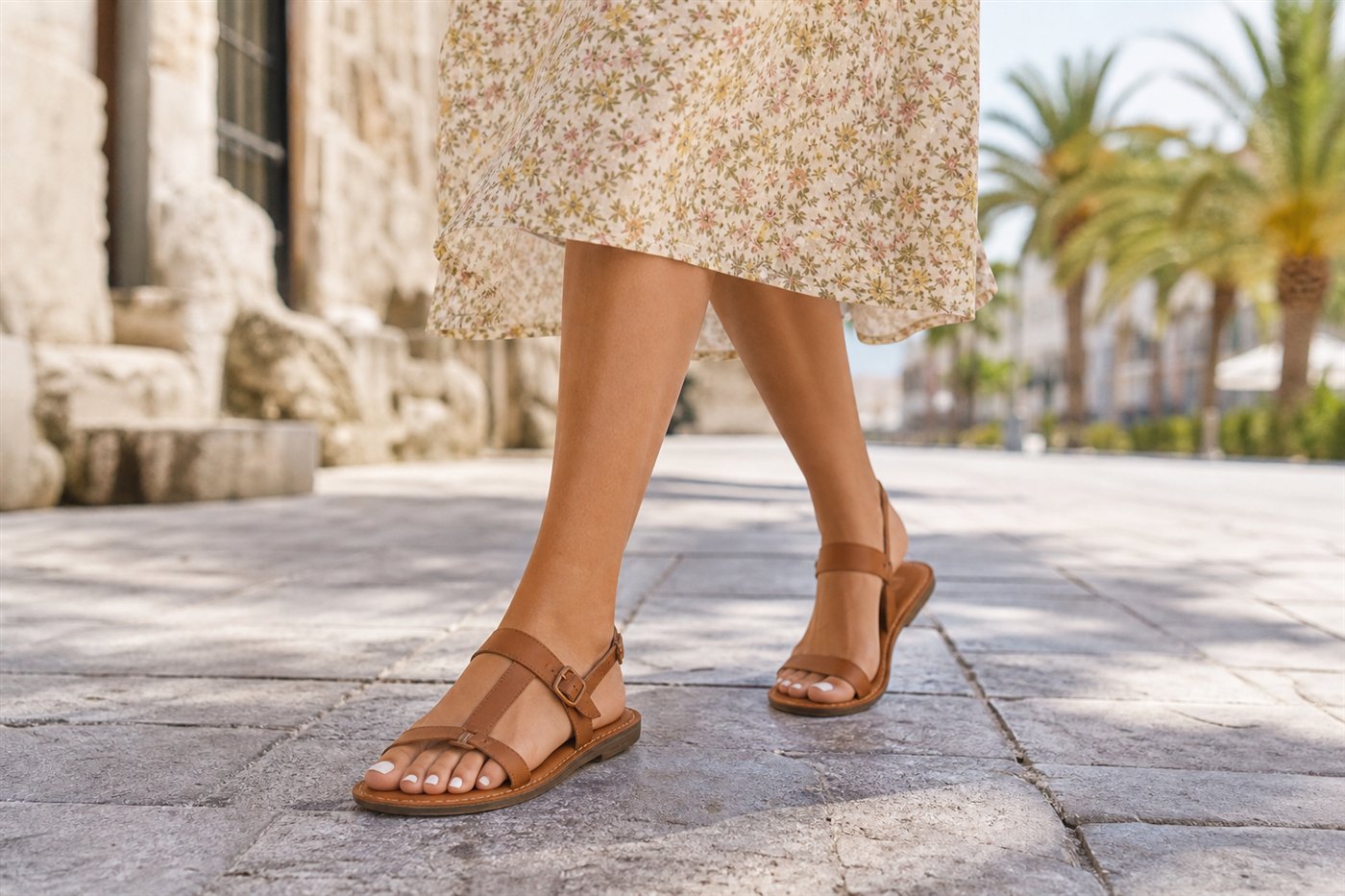

8 Comfortable Walking Sandals for Summer Travel That Look Good, Too
Most comfortable walking sandals look like orthopedic afterthoughts. The stylish ones leave your arches screaming by mile two. For summer travel, you need sandals that pull double duty: support for 10-mile days and a silhouette that works with sundresses, shorts, or linen pants. I looked at podiatry recommendations, real user reviews, and wear-test data to find eight options that actually deliver both. Here is what the data says works.
What Makes a Walking Sandal Actually Comfortable? The Mechanics Matter
Comfort is not a feeling. It is physics. A sandal that hurts after 30 minutes has failed at the fundamental job of a shoe: distributing your body weight evenly across the foot.
Three Non-Negotiable Features
First, arch support. Flat sandals force your plantar fascia to overstretch. Look for a molded footbed with a visible rise under the midfoot. Second, cushioning density. EVA foam is light but compresses fast. Polyurethane or cork-latex blends hold their shape longer. Third, outsole grip. Smooth rubber on wet pavement is a fall risk. Look for multi-directional lugs or tread patterns similar to hiking sandals.
Here is a quick comparison of the materials used in the sandals we will cover:
| Sandal | Footbed Material | Arch Support Level | Outsole Type | Weight (per sandal) |
|---|---|---|---|---|
| Birkenstock Arizona | Cork-latex | High | EVA | 9 oz |
| Teva Tirra | Shoc Pad PU | Medium | Rubber with Spider Rubber | 7 oz |
| Chaco Z/Cloud | LUVSEAT PU | High | Non-marking EcoTread | 11 oz |
| Vionic Tide II | Orthotic EVA | High | Rubber | 8 oz |
The First Mistake Most Travelers Make (And How to Avoid It)
People buy sandals that feel soft in the store. That marshmallow sensation comes from low-density foam that collapses within weeks. By day three of a trip, the cushioning is gone, and your feet are taking the impact directly.
Instead of squish, look for responsive support. A sandal should feel firm under the arch but forgiving at the heel strike. The Birkenstock Arizona ($135) uses a cork-latex footbed that molds to your foot over time. It starts firm. After 20 hours of wear, it fits like a custom insole. That is why people keep them for a decade.
Another common failure: straps that rub. Leather straps soften with wear but can blister during the break-in period. Synthetic straps like those on the Teva Tirra ($65) are softer out of the box and dry faster after rain. If you have narrow feet, adjustable straps are not optional — they are the difference between a secure fit and a flopping sandal that causes blisters.
When to Skip a Walking Sandal Altogether
Not every trip needs walking sandals. If your itinerary includes rocky trails, steep cobblestone streets, or temperatures below 60°F, closed-toe shoes are safer. Sandals offer zero ankle support and minimal toe protection. A rolled ankle on uneven pavement is a trip-ender.
For city walking with mixed terrain — flat sidewalks, museum floors, cafe patios — sandals are fine. But if you are hiking to a waterfall or navigating loose gravel, wear trail runners or hiking shoes. The Keen Newport H2 ($130) is the closest you can get to a sandal that works on light trails, but even that has limits on steep descents.
Also skip sandals if you have a history of plantar fasciitis flare-ups. The open heel on most sandals provides less stability than a closed-back shoe. If your podiatrist has told you to avoid slides or backless shoes, listen. Look for sandals with a heel cup and a secure backstrap, like the Chaco Z/Cloud ($115).
Eight Sandals That Pass the Comfort-and-Style Test
I filtered for three criteria: podiatrist-recommended levels of arch support, positive user reviews after 50+ miles of wear, and a design that does not scream “hiking gear.” Here are the eight that made the cut.
- Birkenstock Arizona ($135). The benchmark. Cork footbed molds to your foot. Two adjustable straps. Works with jeans, dresses, or shorts. Break-in period is 1-2 weeks. Not for wet conditions — cork swells.
- Teva Tirra ($65). Lighter than Birkenstocks. Dries fast. Good for water-adjacent travel. The Shoc Pad in the heel absorbs impact well. Less arch support than Birkenstock but better for flat feet.
- Chaco Z/Cloud ($115). The highest arch support on this list. Adjustable straps wrap the entire foot. Heavy at 11 oz per sandal but bombproof. Lasts years. Best for people with high arches.
- Vionic Tide II ($100). Built on a podiatrist-designed orthotic footbed. Great for plantar fasciitis. The toe post can be annoying for some. Runs narrow.
- Naot Kayla ($175). Premium leather. Anatomic cork footbed with a metatarsal bump that supports the forefoot. Expensive but resoleable. Dressiest option here.
- Ecco Offroad ($160). Direct-injected PU sole that does not compress. Leather upper. RECEPTOR technology mimics natural foot movement. Good for long walking days on pavement.
- Mephisto Helen ($220). The luxury pick. Soft air-bag sole. Leather-lined cork footbed. Heavy but supremely comfortable for all-day wear. Resoleable.
- Keen Elleci ($120). Closed toe for protection. Washable. Good for travel days that mix walking and light outdoor activities. Runs wide.
How to Test a Walking Sandal Before You Travel
Do not buy a sandal and wear it for the first time on a trip. That is the fastest way to ruin a vacation. Here is a three-day test protocol.
Day one: Wear the sandals indoors for two hours. Check for pressure points, especially at the toe post or strap edges. If you feel hot spots, adjust the straps or return the sandals.
Day two: Wear them on a 30-minute walk on pavement. Pay attention to heel slip. If your heel lifts more than a quarter-inch with each step, the fit is wrong. Add a heel grip or try a different size.
Day three: Wear them for a full day of errands — at least four hours of walking with stops. Check for blisters, arch fatigue, or numbness in your toes. Numbness means the straps are too tight or the footbed is too narrow.
If the sandals pass all three days, they are travel-ready. If not, do not force it. Return them and try a different model. The right fit varies by foot shape — no single brand works for everyone.
Quick Comparison: Which Sandal Fits Your Travel Style?
Here is a final breakdown to help you decide based on your primary travel activity.
| Travel Style | Best Pick | Why |
|---|---|---|
| City walking (museums, cafes) | Ecco Offroad | PU sole lasts all day. Leather looks polished. |
| Beach + boardwalk | Teva Tirra | Dries fast. Lightweight. Easy to pack. |
| Multi-city Europe trip | Birkenstock Arizona | Classic style. Repairable. Works with any outfit. |
| Active / light hiking | Chaco Z/Cloud | Best grip and arch support. Adjustable fit. |
| Plantar fasciitis | Vionic Tide II | Orthotic footbed. Heel cup stabilizes the foot. |
| Dressy dinners + walking | Naot Kayla | Leather looks expensive. Cork footbed supports. |
No single sandal is perfect for every foot. But if you start with the mechanics — arch support, cushioning density, outsole grip — and test before you travel, you will find a pair that keeps you walking all day without complaining. That is the whole point.