

How to Layer Necklaces Like a Pro: Tips for Fine Jewelry Lovers
70% of women own at least three fine necklaces. Fewer than 1 in 10 wear them together without tangling or looking messy. The problem isn’t the jewelry — it’s the method. You don’t need a stylist or a drawer full of expensive chains. You need a system.
Here’s the exact framework stylists use to layer necklaces that sit perfectly, never twist, and make any neckline look intentional. No guesswork.
Why Most Layered Necklace Looks Fail (and How to Fix It)
Layering necklaces is not random. Most people grab two chains of similar length and clip them on. That’s the mistake.
The three failure modes are predictable:
- Tangles: Chains of the same length rub together and knot. The fix is a 4–6 inch difference between each layer.
- Visual clutter: Too many pendants in one spot create noise. The fix is to distribute weight across the collarbone, sternum, and décolletage.
- Metal mismatch: Mixing yellow gold with rose gold works. Mixing matte with high-polish on the same chain length does not.
One more thing: your neckline decides your anchor chain. A crewneck hides a 16-inch choker. A V-neck needs a 20-inch pendant to sit inside the V. Start with the neckline, then build out.
The 3-Length Formula That Works on Every Body Type
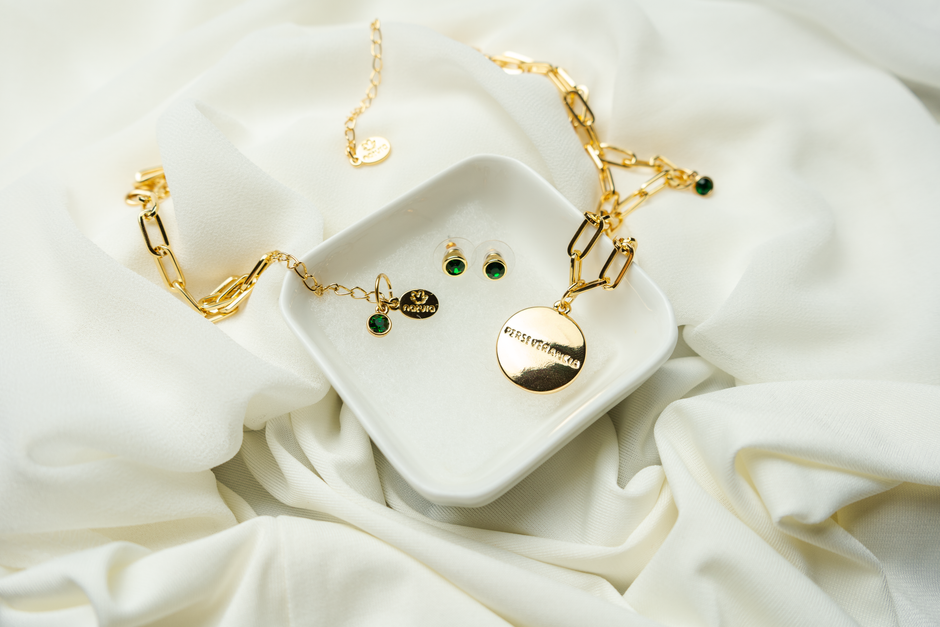
There is one ratio that professional stylists use for 90% of clients. Three chains, spaced exactly 4–6 inches apart. Here’s the breakdown with real measurements.
| Layer | Length | Best Placement | Chain Style |
|---|---|---|---|
| Choker | 14–16 inches | Sits at the collarbone | Fine cable chain or solid curb |
| Mid-length | 18–20 inches | Hits the sternum | Box chain with a small pendant |
| Long | 24–26 inches | Reaches the décolletage | Rope chain or beaded strand |
The 16-inch choker + 20-inch pendant + 26-inch rope chain is the most versatile combination. It works with scoop necks, turtlenecks, and button-downs. Adjust the middle length to 18 inches if you have a shorter torso.
Avoid putting a heavy pendant on the shortest chain. It pulls the necklace down and distorts the layering. Keep the choker plain or use a tiny charm. Save the statement piece for the 20-inch or longer chain.
Metal Mixing: The One Rule You Can’t Break
Mixed metals are fine. Mixing finishes on the same chain length is not. A high-polish yellow gold chain next to a matte rose gold chain of the same length creates a visual fight. The light reflects differently, and the eye can’t settle.
Here’s what works:
- Same finish, mixed metals: All high-polish. A yellow gold choker with a rose gold mid-chain and a white gold long chain. The uniform shine ties them together.
- Same metal, mixed finishes: All yellow gold. One matte hammered, one high-polish, one textured. The color unifies them.
- One anchor metal: Choose one dominant metal (60% of the look) and use the other two as accents. For example, a yellow gold choker and mid-chain with a thin white gold long chain.
Brands like Mejuri, Catbird, and Vrai offer matching sets in multiple metals. If you’re buying individual pieces, stick to one brand’s finish consistency — their polishing techniques are usually uniform across collections.
Three Necklines, Three Layering Systems
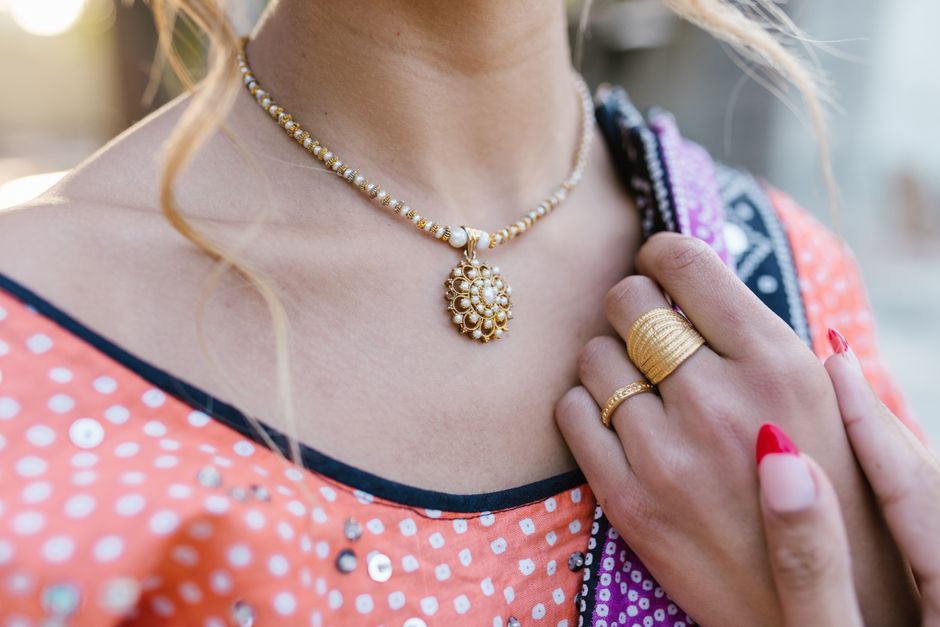
Your neckline dictates which lengths work. Here are the exact setups for the three most common necklines.
Deep V-Neck or Plunge
You need a Y-shape. Use a 16-inch choker, then a 24-inch chain with a pendant that sits exactly at the bottom of the V. The third chain at 20 inches is optional — it fills the gap. Never wear a choker alone with a deep V. It leaves too much bare skin and looks unbalanced.
Boatneck or Off-Shoulder
The neckline is horizontal. Use three chains of increasing length that all stay above the fabric. A 14-inch choker, 16-inch mid, and 18-inch long chain. Keep all pendants small. The horizontal line of the neckline already draws the eye — you don’t want pendants competing with it.
High Neck or Turtleneck
Skip the choker entirely. Start at 20 inches and go to 26 or 30 inches. The chains should fall below the collar. Long pendant chains work best here — they elongate the torso and break up the solid fabric. A 24-inch chain with a coin pendant is the safest choice.
When Not to Layer Necklaces

Layering isn’t always the answer. Here are three situations where a single necklace performs better.
- Busy patterns: A floral print or heavy pinstripe already has visual density. Adding multiple chains creates chaos. Wear one simple chain at 18 inches.
- Extremely short neck: Layers can make a short neck look shorter. A single 20-inch chain that falls below the collarbone elongates the neck better than three stacked chains.
- Statement earrings: If you’re wearing large hoops or chandelier earrings, limit necklaces to one or two thin chains. Let the ears be the focal point.
The best layered necklace look is the one you forget you’re wearing. If you’re adjusting chains every ten minutes, you have too many or the wrong lengths. Start with the 16-20-26 formula, match your finishes, and check the mirror once. That’s it.