

How to Choose a Winter Scarf for Warmth and Easy Ties
The safest default is a medium-width wool scarf long enough to wrap twice around your neck without creating a bulky knot. That choice solves the most common winter problem: you leave home warm, then spend the day fighting a scarf that slips, scratches, or leaves a gap at your collar. Picture a windy January commute. Your coat is zipped, your gloves are on, but cold air keeps reaching the skin under your chin. A narrow fashion scarf will not fix that gap. A huge blanket scarf may trap warmth but overwhelm the coat and collapse every time you move. The right scarf matches the cold, your coat, your skin, and the way you actually plan to wear it.
Which winter scarf fabric is warmest and easiest to care for?
Fiber labels give useful clues, but they do not tell the entire story. Compare fiber, weave, thickness, wind resistance, and care before paying a premium.
| Fabric | Warmth and feel | Strengths | Common drawbacks | Best use |
|---|---|---|---|---|
| Merino wool | Warm, breathable, often smooth | Handles daily wear and manages moisture | Some people react to coarse fibers | Everyday commuting |
| Traditional wool | Warm and resilient | Good wind resistance and strong shape retention | Can feel scratchy; quality varies widely | Cold, active outdoor use |
| Cashmere | Very soft and light for its warmth | Comfortable against bare skin | Costs more and needs gentle care | Dress coats and low-abrasion use |
| Alpaca | Warm, light, sometimes silky | Useful for people who dislike typical wool texture | Loose fibers can shed or pill | Soft, high-volume winter styling |
| Fleece or polyester knit | Light, warm, and quick-drying | Easy washing and strong moisture resistance | Can hold odors and look less formal | Travel, sport, and wet weather |
Read past the fiber percentage
A label that says 100% cashmere does not guarantee a better winter scarf. Check the fabric weight, edge finish, and density. A thin cashmere scarf can work beautifully under a tailored coat, but it may not stop a sharp wind. A wool blend with a compact weave can offer better outdoor protection at a lower cost.
My material verdict
Choose merino or dense wool for one scarf that must handle daily use. Choose cashmere when softness and low bulk matter more than rough weather. Choose fleece when washing, drying speed, and outdoor activity come first. Choose alpaca when you want visible texture and warmth but dislike the feel of standard wool. The strongest value usually comes from buying the fabric that matches your routine, not the most expensive label.
How do you tie a winter scarf so it stays put?
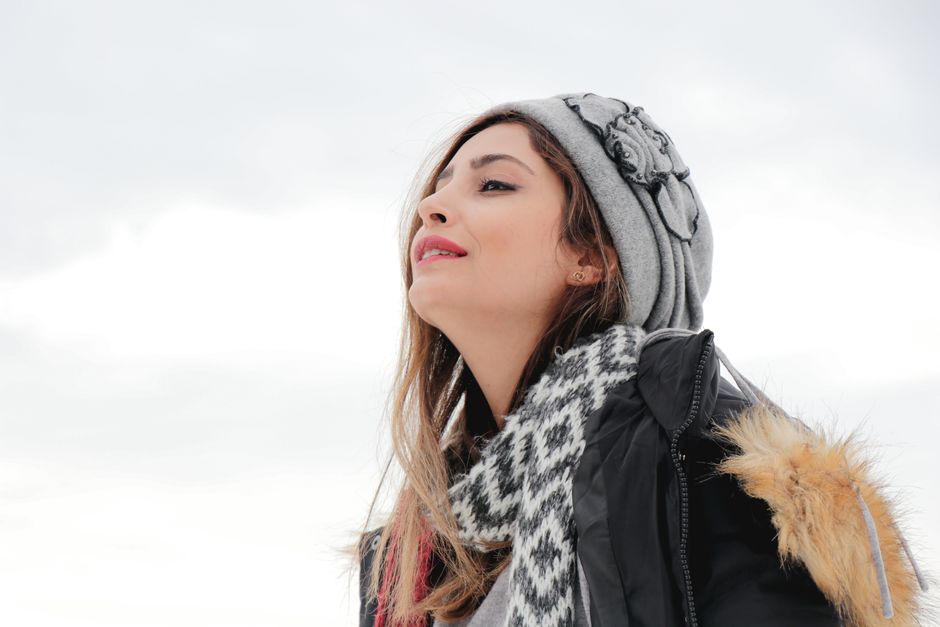
My opinion: the best scarf knot is the one that locks the fabric near your collar without compressing your throat. Start with a simple wrap before trying elaborate styling. Most scarf failures come from using too little fabric, leaving the ends uneven, or placing the knot too low.
- The once-around wrap: Place the scarf evenly around your neck and let both ends hang in front. Cross one end over the other near the sternum, then pull the upper end through the opening beside your neck. Keep the knot loose enough to breathe. This works best with medium-weight wool and a structured coat.
- The Parisian knot: Fold the scarf in half, place the folded end on one side of your neck, and pull the loose ends through the loop. Tighten the loop close to the collar. This creates a compact, secure shape, but it needs a scarf at least 170 centimeters long.
- The hidden loop: Wrap the scarf once around your neck, cross the ends, and tuck both ends beneath the wrapped layer. Pull gently until the fabric covers the front of the collar. This gives a clean coat-friendly finish and prevents loose ends from catching on bag straps.
- The shoulder drape: Leave the scarf open around the neck and place both ends over the shoulders. Add a belt or coat fastening over the middle if you need stability. This looks polished but provides less wind protection because the neck remains partly open.
Fix the two common tying failures
If the scarf keeps sliding, the fabric may be too smooth or the wrap may sit too low. Raise the first pass until it touches the collar and use a loose knot to create friction. If the scarf feels bulky, do not immediately buy a thinner one. Remove one layer, turn the knot to the side, or choose a narrower width. Large scarves often look oversized because the wearer folds the entire width before wrapping.
For cold wind, tuck the final ends inside the coat. For indoor movement, keep one end outside so you can remove the scarf quickly without disturbing your hair or collar.
Which named winter scarves are worth comparing?
Best buying position: spend more on softness and finish only when you will wear the scarf often and care for it properly. A premium label cannot compensate for the wrong length, a loose weave, or a color that clashes with your coat rotation.
Best value for frequent commuting
The Uniqlo HEATTECH Scarf is the practical pick for shoppers who want a compact synthetic knit, easy maintenance, and a lower entry price. Its heat-retaining construction suits train platforms, travel, and damp conditions better than delicate cashmere. It is not the most formal option, and synthetic fibers can hold odor after repeated wear, so wash it according to the current care label and let it dry fully.
Best softness-to-weight balance
The Johnstons of Elgin Cashmere Scarf is a strong choice for someone who wants a light, soft layer under a tailored coat. A typical version measures about 180 by 25 centimeters and uses 100% cashmere. The narrow profile reduces collar bulk, but it does not provide the same wind block as a dense wool scarf. Choose it for comfort and polish, not rough outdoor work.
Best statement size and everyday durability
The Acne Studios Canada New Scarf measures about 200 by 45 centimeters and uses a substantial wool construction. It offers enough length for a double wrap and enough width to cover the upper chest. The tradeoff is volume: it works best with a roomy coat and can overwhelm a small frame. For a recognizable designer option with real cold-weather coverage, this is the clearest pick.
The Burberry Classic Check Cashmere Scarf sits at the luxury end, with many versions around 168 by 30 centimeters and a 100% cashmere composition. It delivers softness and a distinctive pattern, but the price is driven partly by branding and design. A scarf has no AM Best rating or J.D. Power score, so judge it by fiber, dimensions, edge finish, and care instructions. Prices vary by country, tax, retailer, and individual color, so get multiple quotes before paying full list price. There is no state-specific scarf coverage requirement; the useful comparison is warmth per wear and maintenance cost.
Winter scarf questions buyers ask before purchasing

Is wool warmer than cashmere?
Not automatically. Dense wool usually blocks wind better and tolerates harder use, while cashmere feels softer and can provide excellent warmth with less weight. For outdoor commuting in changeable weather, choose dense wool. For a scarf worn under a structured coat, choose cashmere if softness matters and you will protect it from friction.
Should a winter scarf touch bare skin?
Only if the texture feels comfortable after several minutes. Try the scarf against the side of your neck, not just your hand. A fiber that feels acceptable for ten seconds may feel irritating after a full commute. If you react to wool, choose fine merino, alpaca, cashmere, or a smooth fleece lining.
When should you not buy a thick blanket scarf?
Skip it when you wear narrow lapels, carry a shoulder bag, or spend most of the day indoors. Extra width adds warmth, but it also creates bulk and can catch on straps. A medium-width scarf gives better control in those situations.
How many winter scarves does one person need?
Two well-chosen scarves cover most wardrobes: one dense wool scarf in a neutral color for cold commuting and one lighter, softer scarf for dressier outfits or mild days. Add a fleece option only if you exercise outdoors, travel through wet weather, or need frequent machine washing.
Return to the January commute at the start: the solution is not a scarf with the highest price or the thickest label. It is a scarf with enough length to seal the collar, a fabric that matches the weather, and a tie that stays in place. Start with approximately 180 by 30 centimeters in dense wool, then adjust for your coat, skin, and daily routine.