


Why most hat peaks are garbage and the one I’ve bought three times
I lost my favorite hat on the side of Mt. Washington in 2019. It was a $45 Arc’teryx Elaho, and a 40mph gust just snatched it off my head because the peak was too long and acted like a sail. I watched it tumble into the Great Gulf Wilderness like a blue nylon bird. I cried a little. Not because of the money, but because I’d spent three years breaking in that brim to the perfect curve.
Most people talk about the fabric or the ‘breathability’ of a hat, but they’re missing the point. It’s all about the peak. If the peak is too floppy, you look like a wet dog. If it’s too stiff, it catches the wind and flies into a ravine. Finding the best hats peak isn’t about looking at a spec sheet; it’s about how much abuse that plastic insert can take before it loses its soul.
The day my forehead turned into a lobster
I used to think any baseball cap would do. I was wrong. I was completely wrong. In 2017, I hiked 15 miles in the High Sierras wearing a cheap promotional cap I got from a tech conference. The peak was made of some kind of cardboard. About two hours in, I started sweating. The cardboard got soggy. By noon, the brim was drooping so low I had to tilt my head back just to see the trail. I looked like a confused turtle.
The worst part? Because the peak had lost its shape, the sun snuck in through the sides. I ended up with a sunburn that was shaped exactly like a crescent moon on my right temple. It peeled for two weeks. It was embarrassing. It was a failure of equipment and a failure of my own judgment. Anyway, that’s when I started obsessing over what actually makes a brim work.
A stiff peak is like a tiny porch for your face. If the porch collapses, the house is ruined.
The data nobody asked for
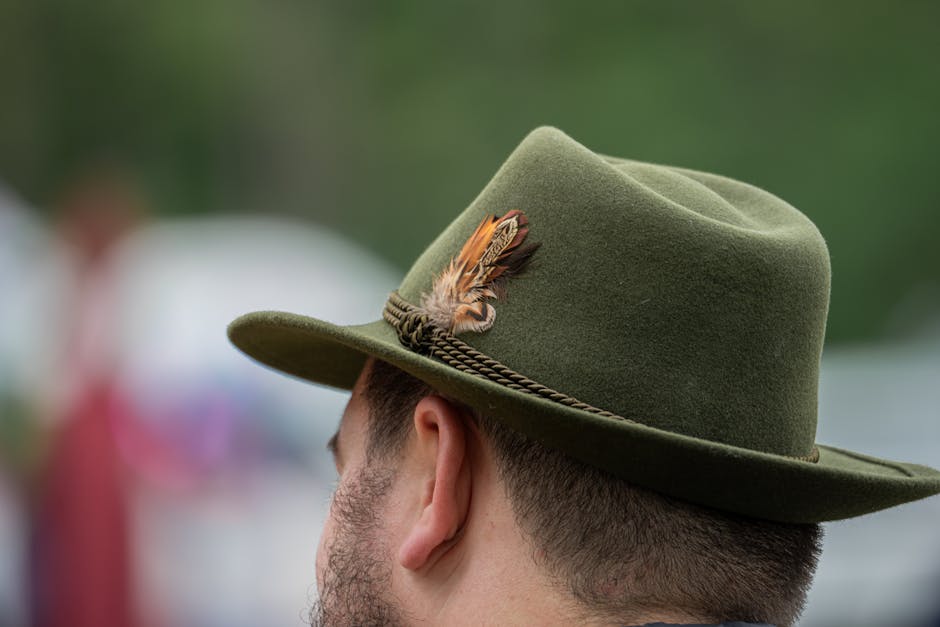
I’m not a scientist, but I did get bored last Tuesday and decided to test the four hats I currently own. I wanted to see how much the brim actually deflects under pressure. I used a kitchen scale and a ruler. I call it the “Soggy Peak Stress Test.” I soaked each hat in the sink for exactly 5 minutes, then measured how many millimeters the tip of the brim dropped under its own weight.
- Tilley LTM6 Airflo: 0mm drop. The thing is a tank.
- The North Face Horizon: 14mm drop. Basically a wet noodle.
- Outdoor Research Swift: 4mm drop. Respectable.
- Patagonia Duckbill: 22mm drop. Total disaster.
The Tilley is the clear winner here, even if it makes you look like a middle-aged birdwatcher. I’ve bought the same LTM6 three times now. I don’t care if it’s not “cool.” I don’t care if my wife says I look like I’m about to go on a safari in the suburbs. It works. The brim is exactly 6.8cm deep—not too long to catch the wind, but long enough to keep the glare off my polarized lenses. It’s the gold standard.
Why I’m right and the internet is wrong about Patagonia
I know people will disagree with me on this, and honestly, I might be wrong about the brand as a whole, but I genuinely hate the Patagonia Duckbill. Everyone in the ‘ultralight’ community treats it like a holy relic. I think it’s garbage. The peak is too short. It’s like wearing a visor that gave up halfway through. If you wear a Duckbill, I automatically assume you have a podcast about ‘mindfulness’ that no one actually listens to. It’s a vanity hat. There, I said it.
The curvature of the brim—actually, let me rephrase that—the structural integrity of the plastic insert is what matters. Most brands use cheap recycled poly that warps the second it hits 90 degrees. You need something high-density. I want a brim I can sit on in the back of a truck and then pop back into shape. If I can’t abuse it, I don’t want it.
I also have this weird theory that a slightly dirty hat peak protects you better from UV rays. I have no scientific proof for this, and an editor would probably tell me to delete this, but I feel it in my soul. The salt from your sweat creates a crust. That crust is a shield. Don’t wash your hats. Ever.
The part nobody talks about
Weight matters, but only to a point. People brag about their 30-gram hats. Great. My Tilley weighs 91 grams. I’ll take the extra 60 grams of weight if it means I don’t have to squint for eight hours straight.
What I mean is—actually, let me put it differently. A hat is a tool, not an accessory. If you’re looking for the best hats peak, you need to look at the underside of the brim. It should be a dark color. Black or dark grey. Why? Because it absorbs the light reflecting off the water or the snow. If the underside of your peak is white or light blue, you’re just bouncing UV rays directly into your eyeballs. It’s basic physics, yet 50% of the hats at REI get this wrong. It’s infuriating.
I’ve spent too much money on this. My closet is a graveyard of hats with weak peaks and light-colored underbrims. Don’t be like me. Don’t buy the $15 hat at the gas station because you forgot yours at home. You’ll just end up with a lobster forehead and a sense of deep regret.
Is there a perfect hat out there that I haven’t found yet? Maybe. But for now, I’m sticking with the stuff that doesn’t fold when the wind gets mean.
Buy the Tilley LTM6. It’s ugly. It’s expensive. It’s perfect.