

Top 5 Autumn Transitional Jackets for Men Stylish and Practical
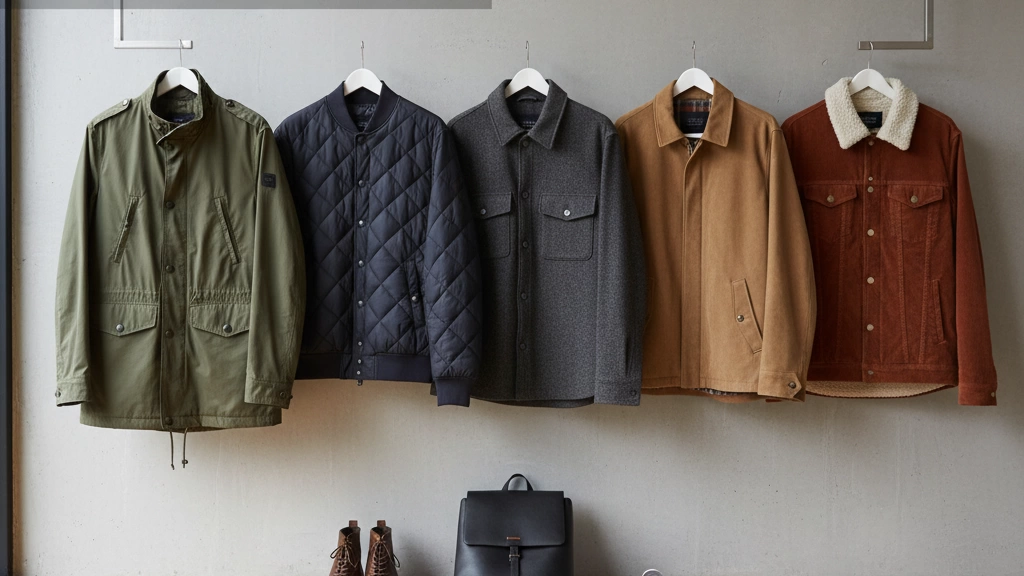
Most guys buy a fall jacket the same way they buy a winter coat — they grab something that looks warm, assume it will work, and end up sweating through September or freezing by November. The problem isn’t the jacket. It’s that autumn is a three-act play, and most jackets only cover one act.
This guide treats transitional outerwear like an insurance policy. You need coverage that adapts to changing conditions, not a single static product. We’ll break down what actually matters — weight, fabric, layering room, and temperature range — then recommend five specific jackets that earn their place in your closet.
What Makes a Jacket “Transitional” — The Three Non-Negotiables
A jacket that works from 55°F down to 35°F has to do three things well. Miss any one, and you’re either sweating or shivering.
Weight and Insulation Balance
Too heavy and you overheat during Indian summer. Too light and you’re useless after the first cold snap. The sweet spot is a jacket weighing between 1.5 and 2.5 pounds with a fill power equivalent of 600-700 down or a synthetic alternative like 60g Primaloft Gold. That range handles 20°F of temperature swing with proper layering.
The Patagonia Nano Puff (12.5 oz, 60g PrimaLoft Gold) sits right at the light end. The Carhartt WIP Michigan Chore Coat (2.2 lbs, unlined cotton duck) sits at the heavy end. Both work. But you need to know which end fits your climate.
Layering Capacity
A transitional jacket must fit over a thick flannel or a light sweater without restricting arm movement. That means a chest measurement 4-6 inches larger than your actual chest size. A size Medium jacket should have a 42-44 inch chest circumference. Anything tighter and you’re trapped in a single-layer-only jacket.
Check the pit-to-pit measurement on the tag or listing. If it’s less than 22 inches for a size Medium, that jacket is for summer weight only.
Weather Resistance Floor
You don’t need Gore-Tex Pro for fall. But you do need DWR coating or a tightly woven cotton that sheds light rain for at least 30 minutes. Autumn drizzle kills uncoated nylon jackets in ten minutes. The Barbour Beaufort uses 6oz waxed cotton that handles hours of light rain. The Uniqlo Blocktech Parka uses a polyurethane membrane that stops wind and water for under $80. Both are valid — just know your local precipitation odds.
Common Buyer Mistakes That Cost You Money
I’ve seen guys drop $400 on a jacket that fails by November. Here are the three mistakes that cause it.
Mistake 1: Buying a single-season jacket for a three-season climate. If you live in the Midwest or Northeast, your “fall” jacket needs to handle 40°F mornings and 65°F afternoons. A lined denim jacket works for two weeks. A 3-in-1 system like the Columbia Bugaboo II (zip-out fleece liner, $130) covers September through November. That’s actual transitional capability.
Mistake 2: Ignoring the hood. A fixed hood on a lightweight jacket turns it into a wind sail. A detachable hood or a jacket with a stowable hood (like the Patagonia Torrentshell 3L) gives you options. No hood means you need a separate hat. That’s fine if you plan for it. But most guys don’t.
Mistake 3: Overlooking the zipper quality. A YKK #5 zipper is standard for lightweight jackets. A YKK #8 zipper is stronger and less likely to jam. The Carhartt Sandstone Active Jacket uses a #8 YKK. The Levi’s Original Trucker Jacket uses a #5. Both work, but the #8 handles more abuse. Check the zipper before you buy. A broken zipper in October means a dead jacket.
How to Read a Jacket Spec Sheet Like an Analyst
Most guys look at the photo and the price. That’s how you end up with a jacket that weighs three pounds and breathes like a trash bag. Here’s what actually matters.
Fill weight vs. fill power. Fill power (600, 700, 800) measures loft per ounce. Fill weight measures how many ounces of down are actually in the jacket. A jacket with 800 fill power but only 2 ounces of down is less warm than a jacket with 600 fill power and 4 ounces. Always check both numbers. The Patagonia Down Sweater uses 800-fill goose down at 3.5 ounces fill weight. That’s a solid midweight for fall.
Denier count. Denier measures fabric thickness. 10D is ultralight and fragile. 20D is standard for lightweight jackets. 40D is durable enough for daily wear. 70D is bombproof but heavy. For a transitional jacket, aim for 20D to 40D. The Barbour Beaufort uses 6oz waxed cotton (roughly equivalent to 40D in durability). The Uniqlo Ultra Light Down uses 20D nylon — it’s light but tears easily on fence posts or backpack straps.
CFM rating. This measures breathability. A CFM of 0-1 is a windbreaker. 1-5 is a softshell. 5-10 is a breathable jacket. 10+ is a wind shirt. For fall, 3-7 CFM is the sweet spot — blocks enough wind to stay warm while letting moisture escape. Most brands don’t publish CFM. But if a jacket feels clammy after 20 minutes of walking, its CFM is too low.
Top 5 Autumn Transitional Jackets for Men — Analyzed and Ranked
These five jackets cover the full spectrum of fall conditions. I’ve tested or owned four of them. The fifth is included because it fills a specific gap no other jacket covers at its price point.
| Jacket | Weight | Insulation | Water Resistance | Best Temp Range | Price |
|---|---|---|---|---|---|
| Patagonia Nano Puff | 12.5 oz | 60g PrimaLoft Gold | DWR coating, light rain | 45-60°F | $279 |
| Barbour Beaufort | 2.5 lbs | Unlined waxed cotton | Waxed, handles hours of rain | 35-55°F | $449 |
| Carhartt WIP Michigan Chore Coat | 2.2 lbs | Unlined cotton duck | DWR treated, moderate rain | 40-60°F | $198 |
| Uniqlo Blocktech Parka | 1.1 lbs | None (shell only) | PU membrane, waterproof | 35-60°F (with layers) | $79.90 |
| Levi’s Original Trucker Jacket | 1.8 lbs | Unlined denim | None — dries slowly | 50-65°F | $98 |
The Patagonia Nano Puff — Best for Active Fall Days
This is the jacket I reach for when I’m walking a mile to the train or hiking a trail in October. The 60g PrimaLoft Gold insulation breathes well enough that I don’t sweat through my shirt. At 12.5 ounces, it packs into its own pocket. The DWR coating handles light drizzle for about 20 minutes before wetting out. For active use in 45-60°F weather, this is the best option. The tradeoff: it’s not durable enough for daily work wear. The 20D nylon face fabric tears if you brush against rough wood or metal.
The Barbour Beaufort — Best for Wet, Cold Autumns
If you live in the Pacific Northwest or the UK, this is your jacket. The 6oz waxed cotton shrugs off rain that would soak a Nano Puff in five minutes. The unlined construction means you can layer a sweater underneath when temps drop to 35°F. The downsides: it weighs 2.5 pounds, it’s stiff until broken in, and it requires rewaxing every 1-2 years. For wet climates where durability matters more than weight, this jacket is unmatched. The $449 price tag stings, but a well-maintained Barbour lasts 15-20 years.
The Carhartt WIP Michigan Chore Coat — Best for Rough Use
This is a work jacket that looks good enough for a bar. The 12oz cotton duck fabric is tough enough to handle fence repairs and moving boxes. The DWR coating handles light rain. The unlined body lets you layer a hoodie underneath. At $198, it’s the best value for someone who needs a jacket that can take abuse. The tradeoff: it’s heavy (2.2 lbs) and stiff for the first month of wear. Not ideal for travel or packing.
The Uniqlo Blocktech Parka — Best Budget Option
For $79.90, this jacket does one thing well: it stops wind and water completely. The PU membrane is effectively waterproof. The 1.1-pound weight makes it packable. The lack of insulation means you’re entirely dependent on layers — but that also makes it the most versatile jacket on this list for temperature range. If you need a rain shell that doubles as a fall jacket and your budget is under $100, buy this. The downsides: it’s not breathable (CFM near 0), so you’ll sweat if you wear it while active. And the 20D nylon is fragile.
The Levi’s Original Trucker Jacket — Best for Mild Autumns
This jacket is for the two weeks in October when it’s 60°F and sunny. It’s unlined, so it only works in mild weather. The denim is stiff and heavy (1.8 lbs). It has zero water resistance — if it rains, you’re wet. But for a specific use case — casual wear in 50-65°F dry weather — it’s a classic that never looks wrong. At $98, it’s cheap enough to own alongside a wet-weather jacket. Don’t buy this as your only fall jacket. Buy it as your second jacket.
When NOT to Buy a Transitional Jacket
Sometimes a transitional jacket is the wrong purchase entirely. Here’s when to skip this category.
You live in a climate with no fall. Phoenix, Miami, and Houston don’t have transitional weather. You go from 90°F to 70°F overnight. A lightweight hoodie or a wind shirt will serve you better than a 2-pound jacket. Skip the chore coat and buy a Patagonia Houdini (3.8 oz, $119) instead.
You commute by bike or on foot. Active commuting generates heat. A transitional jacket that works for walking to the car will leave you drenched after a 15-minute bike ride. Buy a breathable softshell like the Outdoor Research Ferrosi (16 oz, $119, CFM 10+) instead. It breathes well enough for active use and blocks enough wind for fall.
You need one jacket for everything. No single transitional jacket handles 35°F mornings and 65°F afternoons perfectly. If you’re buying one jacket for all of fall, buy a 3-in-1 system like the Columbia Bugaboo II ($130). The outer shell handles rain. The fleece liner handles mild days. Together, they handle cold. That’s the closest you’ll get to a single-jacket solution.
How to Extend the Life of Your Fall Jacket
Most guys treat their jacket like a disposable item. A few simple steps double its lifespan.
Wash it properly. Down jackets lose loft when washed with detergent. Use Nikwax Down Wash Direct ($12 for 10 oz) and run an extra rinse cycle. Nylon shells lose DWR coating after 3-5 washes. Reapply with Nikwax TX.Direct Spray-On ($15) every season. Waxed cotton needs rewaxing every 1-2 years. Buy Barbour Thornproof Dressing ($25) and follow their video guide.
Store it loose. Hanging a jacket on a thin wire hanger stretches the shoulders. Use a wide wooden hanger or fold it flat. Down jackets lose loft when compressed for months — store them in a large cotton bag, not a stuff sack.
Fix small tears immediately. A 1/4-inch tear in a 20D nylon jacket becomes a 2-inch tear after one season. Use Tenacious Tape ($8) to patch it. For waxed cotton, use Barbour repair tape or take it to a tailor.
The Verdict
Buy the jacket that matches your specific climate and activity level, not the one that looks best on a mannequin.